Pétanque: A Game for Outdoor Fun and Social Connection
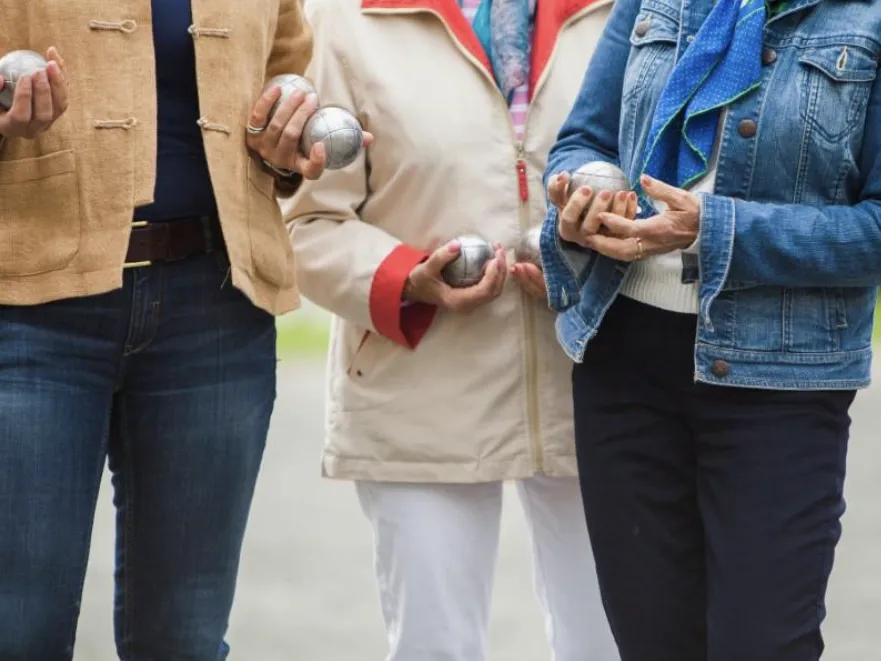
"For many, it’s a ritual of presence and play—an antidote to fast-paced life and digital distraction. Whether in a quiet community or a bustling city, petanque brings people outdoors, into the moment, and into the company of others."
Petanque is a game that requires a combination of precision, strategy, and two feet on the ground. Petanque, or pétanque, can also be the perfect social activity if you’re looking for some outdoor fun while building or re-establishing social connections.
Since people play the game outdoors, it’s a great way to enjoy fresh air and try something new. New to petanque? Read on to learn how it’s played, what it’s about, and what it embodies.
And if you’re planning to spend the weekend exploring The Ville, be sure to check out if there’s a game of petanque scheduled during your visit.
What is Petanque?
Pétanque is a classic French outdoor game that belongs to the family of boules sports. The goal is to toss or roll hollow metal balls (boules) as close as possible to a small wooden target ball, called the cochonnet or jack. Played on a hard dirt or gravel surface, the game emphasizes precision, strategy, and a relaxed, social atmosphere. It has this key rule: players must keep both feet firmly on the ground within a designated circle while throwing. It’s an accessible, low-impact sport that can be enjoyed by people of all ages and abilities.

History of Petanque
Petanque is a classic French outdoor game that evolved from traditional boules. It traces its roots to the early 20th century in Southern France, specifically in the coastal town of La Ciotat near Marseille. The game originated as a variation of jeu provençal (also known as boule lyonnaise). This traditional boule sport required players to take a few running steps before throwing their boules.
Around 1907, a man named Jules Lenoir, who suffered from rheumatism and could no longer run, inspired a friend and café owner named Ernest Pitiot to modify the petanque rules to allow players to stand still while throwing. This new version required players to keep both feet planted on the ground within a small circle—hence the name “petanque,” from the Provençal words pès tancats, meaning “feet together” or “feet anchored.”
The simplified rules and slower pace make petanque a low-impact sport that’s accessible to people of all ages and physical abilities. The game quickly gained popularity in Provence and spread across France during the 20th century. By the 1950s, petanque clubs began to form internationally, particularly in former French colonies like Vietnam, Laos, and Cambodia.
Today, players in over 100 countries engage in it, demonstrating its remarkable global spread, with the Fédération Internationale de Petanque et Jeu Provençal (FIPJP) organizing international championships.
Pétanque in the USA
Petanque has slowly but steadily found its place in the United States, bringing a touch of French culture to parks and neighborhoods across the country. While not as widely known as baseball or basketball, petanque has gained a loyal following among those who appreciate its relaxed pace, strategic depth, and social charm.
People often play the game in public parks, especially in cities with strong European or multicultural influences like New York, San Francisco, Lafayette, and New Orleans. Organized clubs and leagues have popped up nationwide, with the Fédération of Petanque USA (FPUSA) overseeing official play and tournaments. These clubs provide a sense of community and introduce newcomers to the game’s rich traditions.
Interestingly, petanque has found a welcoming home in Texas, where its laid-back pace and social atmosphere align well with the state’s love for outdoor gatherings. Cities like Austin, Dallas, Houston, and San Antonio have active petanque communities, with players meeting regularly in parks and public spaces to enjoy the game.
In Austin, Zilker Park is a favorite spot for casual matches and club meetups. The Austin Petanque Group, one of the more established groups, hosts events that attract both seasoned players and curious newcomers. Dallas and Houston also boast growing communities, often made up of a mix of French expatriates, international residents, and locals looking for a new way to connect and unwind outdoors.
Texans appreciate petanque for its simplicity and the way it brings people together. It’s easy to learn, doesn’t require expensive equipment, and can be played almost anywhere with a flat surface. Whether it’s a shaded park, a backyard game, or even a local bar’s patio, petanque fits naturally into Texas’s culture of casual fun and hospitality.
As interest in outdoor leisure activities grows, petanque’s popularity in the USA continues to rise. It offers Americans a low-cost, screen-free way to enjoy quality time outdoors. Whether for friendly competition or casual relaxation, petanque is becoming a small but meaningful part of the American recreational landscape.

Why Pétanque Fits a Weekend at The Ferns
Petanque captures the spirit of leisure, community, and friendly competition. At its heart, it’s a game of patience and precision sport. But beyond its simple rules lies a rich social experience that draws people together.
What makes petanque special is its relaxed, unhurried nature. It’s often played in parks, town squares, or shady boulevards, where conversation flows as easily as the game itself. You’ll often see friends and strangers alike gather to enjoy the rhythm of play, punctuated by laughter and light-hearted banter.
The game also encourages both mental and physical engagement. You’ll be judging distances, planning your throws, and adjusting to different terrain. It’s a fun and accessible activity for all ages and abilities, making it a great way to spend a relaxed afternoon during your stay at The Ferns. Petanque offers more than just recreation. It fosters connection, brings generations together, and encourages a slower, more mindful pace.

How to Play Pétanque: Pétanque Rules
Petanque is a simple and social game typically played on hard dirt or gravel.
Pétanque Players
Players can play it one-on-one, in pairs (doubles), or in teams of three (triples). In singles and doubles, each player uses three petanque boules; in triples, each player uses two.
Pétanque Setup
The game begins with a coin toss. The winning team draws a throwing circle on the ground (35–50 cm in diameter) and throws a small wooden ball called the cochonnet (or jack) between 6 and 10 meters away. All players must throw from within the circle, with both feet on the ground at all times.
Turns
Players take turns tossing their boules, aiming to get as close as possible to the small wooden jack, or cochonnet. The team whose boule is farthest from the cochonnet must throw the next one. They continue throwing until they either place a boule closer to the cochonnet than any opponent’s boule, or until they run out of boules to throw. It is a legal tactic to hit an opponent’s boule to move it away or to hit the cochonnet itself to reposition it.
Petanque Scoring & Winning
A round (or mène) ends when all boules have been thrown. Only one team can score per round—and that team earns one point for each of their boules that is closer to the cochonnet than the opponent’s nearest boule. The first team to reach 13 points wins the game. The winning team from the previous mène draws a new circle around where the cochonnet landed and throws the cochonnet and their first boule from there to begin the next round.
Petanque Fouls & Measuring
Feet & Circle: To throw, keep both feet on the ground inside the designated circle until you release the boule.
Order & Courtesy: Throw in the correct order and do not pick up boules until the score has been agreed upon. Stand clear and remain silent while a player is throwing.
Measuring: Use a measuring tape, string, or calipers to confirm which boule is closest. Do not move any boules or the cochonnet while measuring.
Common Faults: Stepping out early, throwing out of turn, or moving a boule or the cochonnet during measuring are common faults. For informal play, these can be replayed or adjusted by mutual agreement. For formal play, follow the rules of your local club or federation.

Ready to Try Petanque for Yourself?
Whether you’re a curious traveler, a couple seeking meaningful downtime, or a busy professional craving a change of pace, petanque is the kind of laid-back fun that turns simple moments into lasting memories. Pair it with a peaceful stay at The Ferns, where the slower rhythm of country life invites you to unplug, unwind, and enjoy time outdoors.
Planning how to spend your days? Check out our things to do guide for the best local activities, scenic spots, and relaxing things to do in and around Bellville, Texas.
Frequently Asked Questions About Pétanque
Quick answers to some of the most frequently asked questions about petanque to help you enjoy the game during your visit at The Ferns.
1. What is petanque?
Petanque is a French outdoor game where players throw metal balls (boules) to land as close as possible to a small wooden target ball called the cochonnet.
2. How is petanque pronounced?
Petanque is pronounced pay-tonk, not patonk.
3. What is the difference between petanque and pétanque?
They’re the same game. “Pétanque” is the original French spelling, but “petanque” is commonly used in English.
4. How many players can play petanque?
Petanque can be played one-on-one (singles), in pairs (doubles), or in teams of three (triples).
5. What equipment do you need to play petanque?
You need metal boules, a cochonnet (wooden target ball), and a clear playing area with a hard surface like dirt or gravel.
6. How do you score points in petanque?
After all boules are thrown, the team with the closest boule to the cochonnet scores one point for each boule that’s closer than the opponent’s nearest boule.
7. How long is a game of petanque?
Games are usually played to 13 points and can last from 30 minutes to over an hour, depending on the number of players and pace.
8. Where can I play petanque in the U.S.?
Many cities have petanque clubs or informal groups. Parks, community centers. and some public petanque courts host regular games.
9. Is petanque easy to learn, and can beginners play?
Yes. Petanque is easy to learn and perfect for beginners. The rules are simple and the pace is relaxed, making it an enjoyable way to unwind. While mastering the techniques and strategies takes practice, anyone can join in—whether you’re a seasoned traveler, a retired couple seeking calm, or a busy professional looking to disconnect and enjoy the moment.
10. Is petanque the same as bocce?
No. While similar in spirit, petanque is French and played with metal balls on hard surfaces, whereas bocce is Italian and often played on softer courts. For those curious about petanque vs bocce, the main differences lie in the equipment and style of play.


Comments